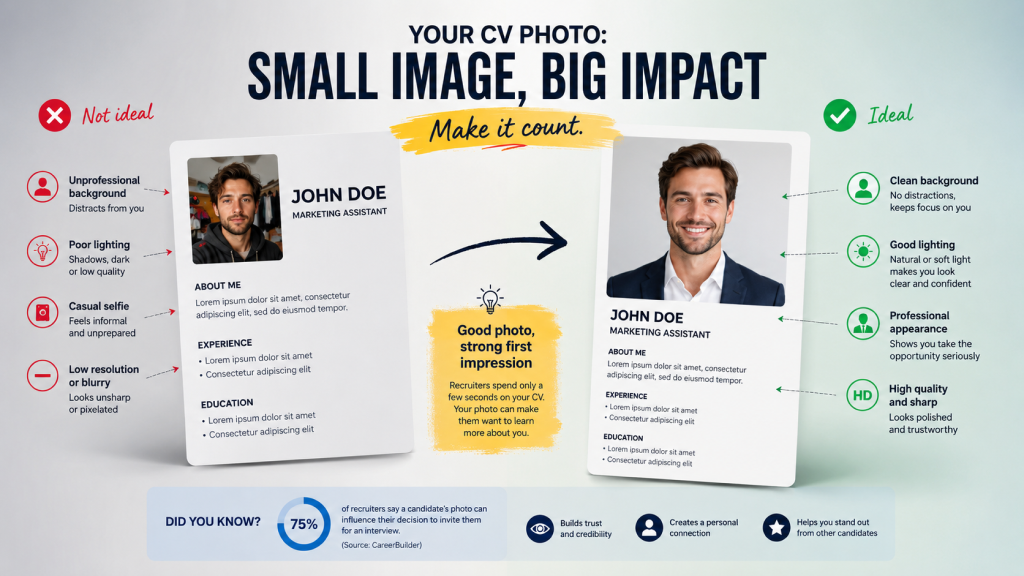
There is a moment, somewhere in the first half-second of a recruiter opening your LinkedIn profile or your CV, when the decision is essentially already made. They have not read your headline. They have not parsed your job titles. They have, however, looked at your face — and their brain has run a snap calculation about competence, warmth, and whether you look like someone they want to put in front of the hiring manager.
The research on this is unkind in its precision. Princeton studies on facial impression formation put the trustworthiness judgment at roughly 100 milliseconds. Eye-tracking data from TheLadders has long shown that recruiters spend nearly one-fifth of their entire profile-viewing time on the photo alone — and in 2026, with an average screening pass of under 30 seconds, that's a meaningful chunk of your whole audition. LinkedIn's own data shows profiles with a professional photo receiving 21 times more views, nine times more connection requests, and 36 times more messages than those without.
In other words: your headshot is not a finishing touch on your application. It is the application, until they read the rest.
What "professional" actually means now
For two decades, the default professional headshot was a particular thing — fluorescent-lit, blue or grey backdrop, slight over-retouching around the jawline, a smile that did not quite reach the eyes. You can still find it in stock libraries and on the partner pages of older law firms. It is also, increasingly, the look that gets a profile skipped.
The shift has been slow but unmistakable. Working headshot photographers now describe the modern brief in almost the opposite terms. Capturely, one of the larger corporate headshot studios in the US, frames the standard like this:
"Not a filter. Not a makeover. You on a good day."
That phrase deserves to be printed on every job-search checklist. It captures the entire problem with the over-corporate headshot and the over-filtered selfie at the same time. Neither one is you on a good day. One is a stranger in a suit. The other is a stranger with smooth skin. Recruiters, who look at hundreds of profiles a week, can tell within seconds which one they're looking at — and a profile that doesn't feel like a real person is a profile that doesn't get a callback.
There is a second, newer pressure on this same dynamic: AI-generated headshots. In one widely cited 2025 study from Magic Studio, recruiters preferred AI-generated headshots in blind tests 76.5% of the time — but 66% also said they would be put off if they later learned the photo wasn't real. The market is asking for two contradictory things at once: polish, and the ability to tell that an actual human stood in front of an actual camera. The way to satisfy both is not synthetic. It's a real photograph, carefully edited.
Why the photo on your CV is doing more work than you think
In Europe, the Middle East, parts of Latin America, and much of Asia, attaching a photo to a CV is still the norm. In the US, UK, Canada, Ireland, and Australia, the convention has swung the other way — explicit anti-bias guidance from recruiters now recommends leaving photos off the CV itself. But "leaving it off the CV" doesn't remove it from the process. The recruiter will still find you on LinkedIn within the first minute of considering your application, and that photo will do the same work the CV photo used to.
So whether or not the image is glued to the top of the document, it is in the room.
Ravi Davda, CEO of Rockstar Marketing, put the recruiter-side view bluntly when asked about LinkedIn profiles without photos:
"I ignore any profile that doesn't have one."
That's a single executive's habit, but it is consistent with the numbers. A LinkedIn profile without a photo is, in the platform's algorithm and in most recruiters' attention budget, effectively invisible.
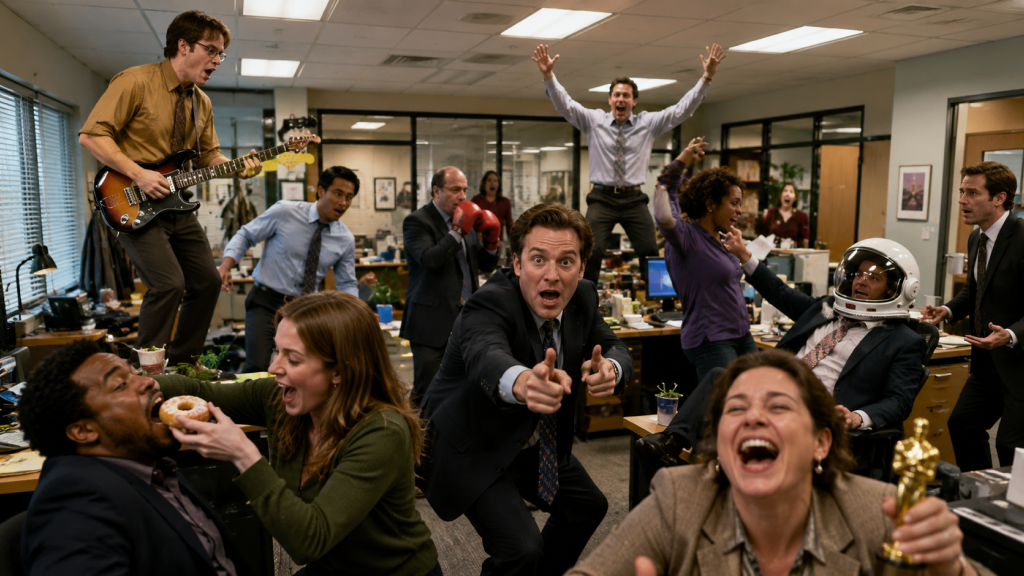
And recruiters absolutely read into the kind of photo you choose. A blurry nightclub selfie, a cropped wedding picture with someone's shoulder still visible, or a hyper-aggressive “crypto grindset” headshot signals something long before they read your experience section. A bad CV photo works a bit like set design in television: it quietly tells people what kind of environment they’re walking into. Some photos suggest a calm, competent workplace. Others suggest The Office — endless awkward energy, passive-aggressive Slack messages, and a manager explaining why the fire alarm is “part of the culture.” And some drift into full SpinBoss casino territory: loud, chaotic, slightly unserious, and one bad quarter away from paying salaries in “exposure.” Fair or not, recruiters make those emotional judgments instantly.
The four edits that actually matter
The good news, for anyone who can't justify $250 for a studio sitting and is working with a friend's iPhone and a window, is that the difference between an amateur photo and a hireable one is rarely a question of equipment. It's a question of four restrained adjustments — the same ones a working headshot photographer makes in post.
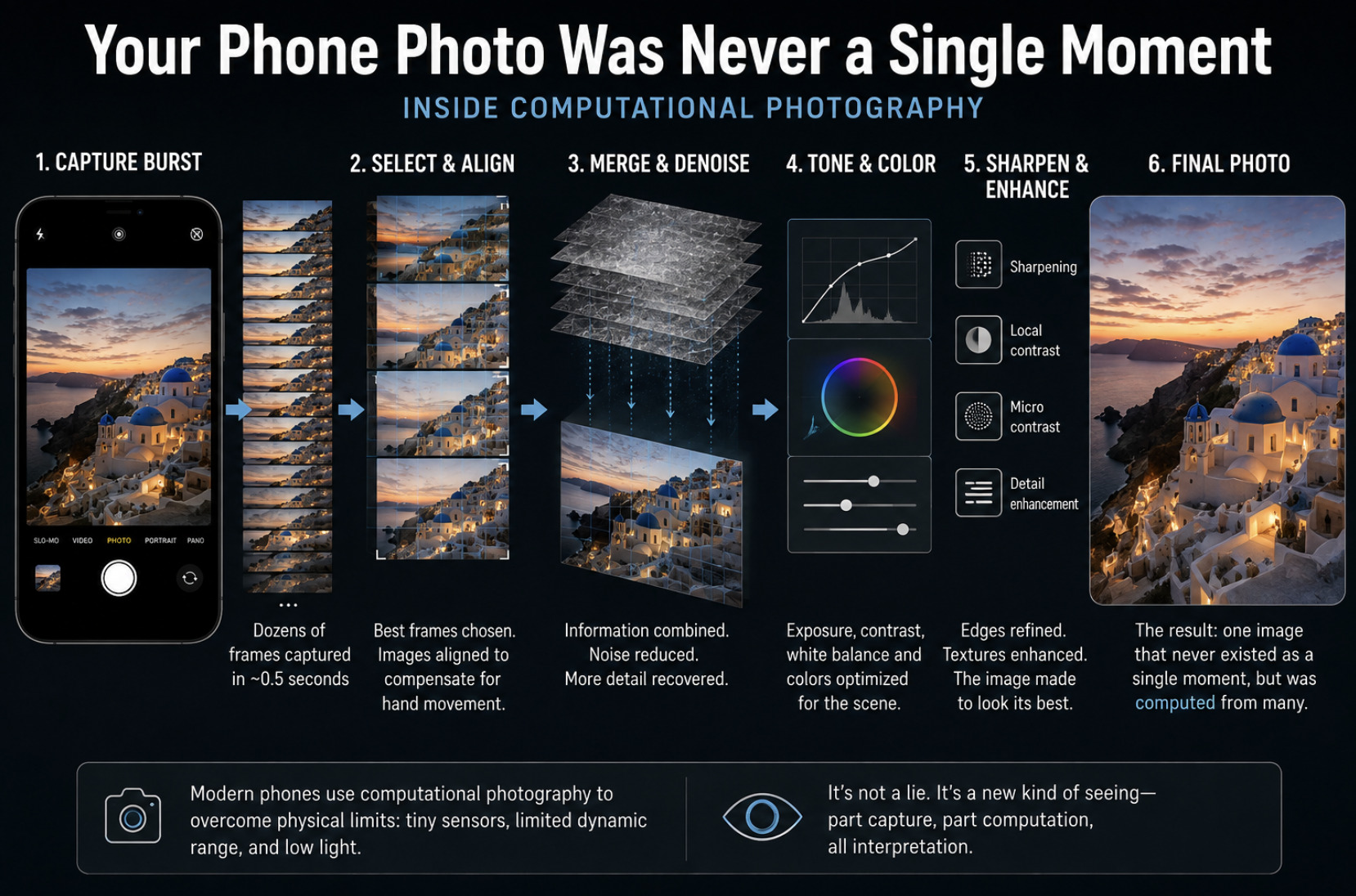
Exposure and white balance. Office lighting is brutal. Tungsten makes skin look jaundiced; mixed daylight-plus-overheads turns one side of your face green. A modest exposure lift and a deliberate white-balance correction — pulling temperature back toward neutral, easing tint off the green — fixes the most common reason a perfectly good portrait reads as unprofessional.
Contrast and presence, not punch. A headshot needs to hold up at the size of a postage stamp on a recruiter's phone. A small contrast lift and a touch of clarity gives the face shape and presence in that thumbnail. The opposite mistake — high-contrast, heavily saturated, "vibrant" presets borrowed from landscape edits — adds drama the photograph wasn't designed to carry and reads as amateur from across the room.
Skin, treated honestly. The single biggest tell of an over-processed professional photo is the moment skin loses its texture. Anete Lūsiņa, who writes about photo editing for working photographers, makes the principle plain: everyone has skin texture, and it is entirely normal. The right move is a light hand — a few seconds of healing on a stray spot, a gentle reduction of shine on the forehead, nothing on the broader skin surface. Smoothing skin into a uniform plane is the modern equivalent of airbrushing, and recruiters who have looked at thousands of profiles read it as exactly that.
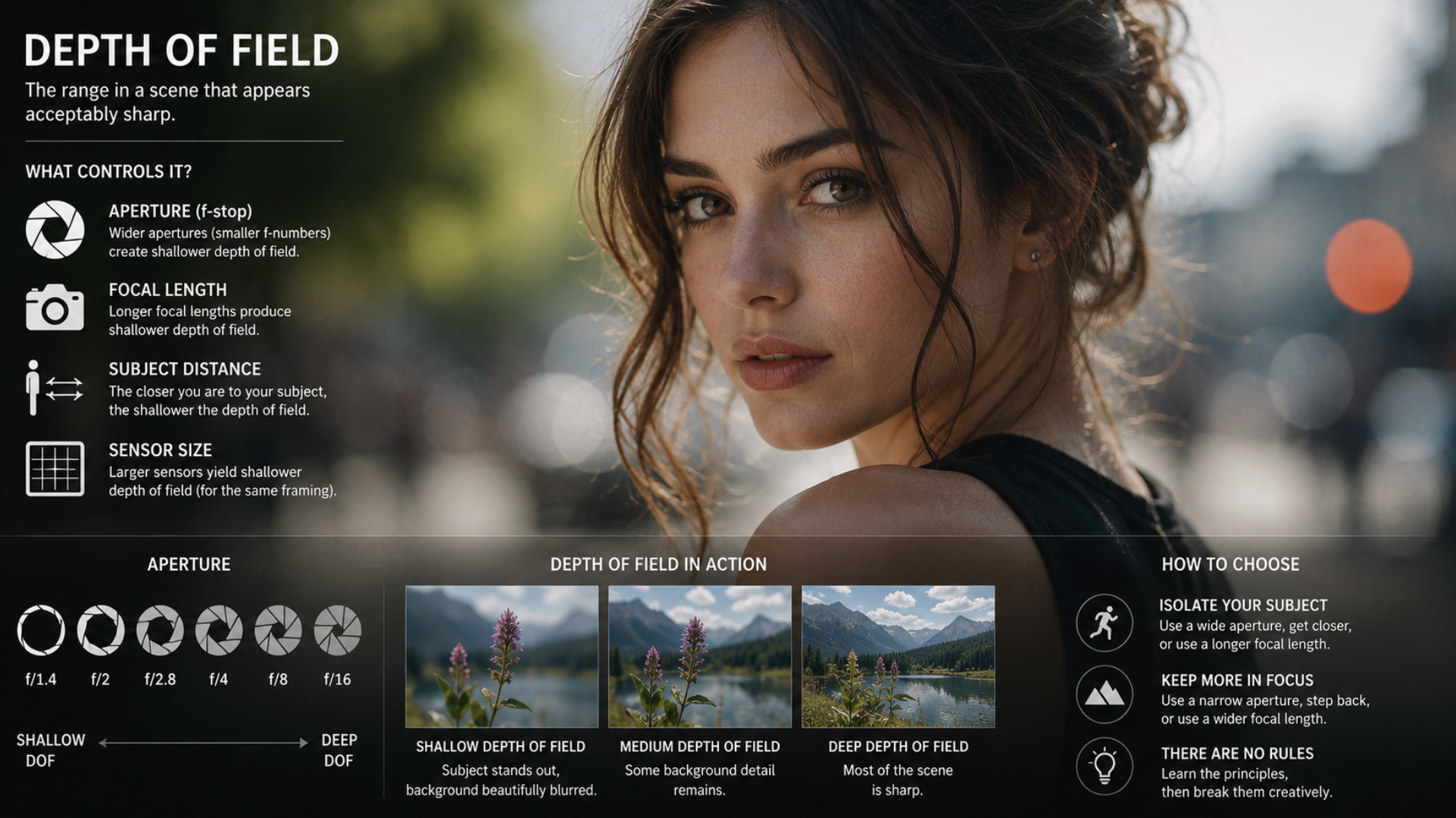
Crop with intent. A professional headshot lives or dies on the crop. The standard is roughly 60% of the frame filled by the face, eyes about a third of the way down, shoulders square. The Instagram-square crop you used for last summer's beach photo is not the crop your CV needs. Recrop tight, leave breathing room above the head, and make sure the eyes land where the recruiter's attention will.
Where a phone editor earns its place
The argument for editing a professional headshot on your phone, in a tool built by working photographers rather than a selfie app, comes down to one thing: the controls match the job. A portrait style built around restrained warmth, honest skin tone, and gentle midtone lift is doing the same work a corporate retoucher would do in Lightroom — minus the $250 sitting fee, minus the multi-day turnaround, and minus the AI-headshot uncanny-valley risk.
The brief is the same as it has always been. A photograph of you, taken on a day you looked like yourself, lit well enough to read clearly at thumbnail size, edited the way a magazine portrait would be edited: corrected, balanced, and left alone where it should be left alone.
The job, after all, is not to look like someone else. The job is to look like the person they are about to interview.