
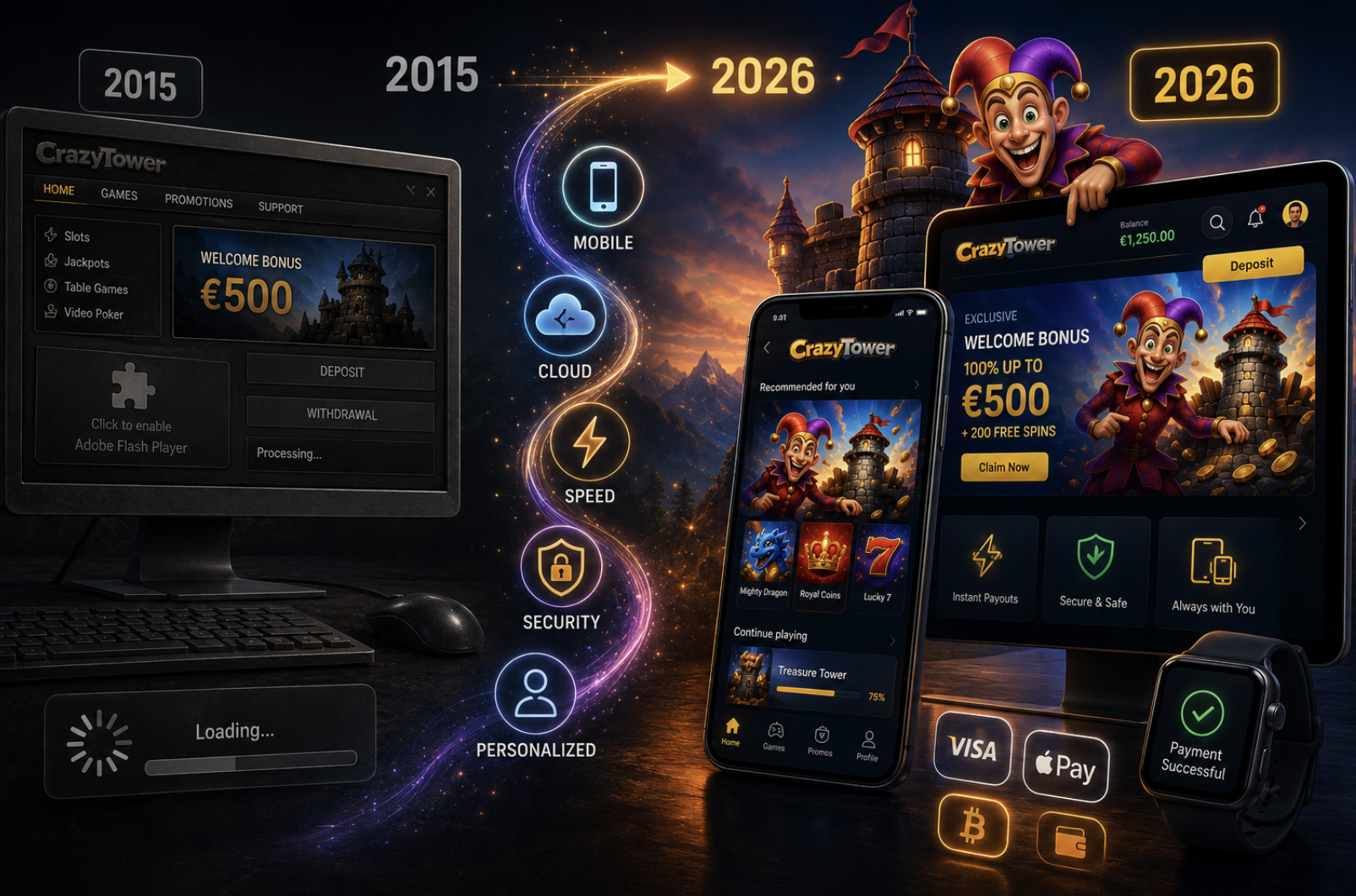
Ten years is a geological age in software. The online gaming platforms of the mid-2010s — clunky, desktop-bound, plagued by plugins and slow payments — bear almost no resemblance to what runs today. The transformation was not a single breakthrough but a convergence of shifts in hardware, networks, regulation, and user expectation that together rebuilt the entire category from the protocol layer up.
Tracing that evolution is worth doing carefully, because it explains not just where these platforms have been but the forces still shaping where they are going. This is a decade-long story of technology quietly dissolving the friction between a person and the thing they came to do.
The death of Flash and the HTML5 reset
The first and most consequential shift was technical and unglamorous: the death of Adobe Flash. For years, browser-based gaming ran on Flash, a plugin that was insecure, battery-hungry, and hostile to mobile devices. Its decline — accelerated by Apple's refusal to support it on the iPhone and finalised when Adobe ended support at the close of 2020 — forced a wholesale migration to HTML5.
This was not a mere format change. HTML5, paired with JavaScript and WebGL, made it possible to build rich, animated, interactive experiences that ran natively in any modern browser, on any device, with no installation. The plugin era's central friction — download this, update that, restart your browser — simply evaporated. Overnight, the baseline expectation became: it works instantly, everywhere, in a tab.
The HTML5 reset democratised development too. Studios could build once and deploy across desktop and mobile, collapsing the cost and complexity of reaching users on whatever screen they happened to be holding.
Mobile-first stops being a slogan
If one statistic defines the decade, it is the crossover when mobile overtook desktop as the primary way people access the internet. That shift rewired everything. Platforms that had treated mobile as a shrunken version of their website discovered that mobile users behave differently: shorter sessions, one-handed interaction, intermittent connectivity, and zero patience for anything that does not fit a thumb's reach.
The winners rebuilt around mobile-first principles rather than retrofitting them. Touch-optimised interfaces, vertical layouts, progressive web apps that install to a home screen without an app store, and aggressive performance budgets to keep things fast on mid-range phones over patchy networks. The design centre of gravity moved permanently from the desk to the pocket.
This is the context in which a 2026-era platform like CrazyTower was conceived — built from inception for browser-based mobile play with no app to download, a design choice that would have been a compromise a decade ago and is now simply the expectation. The plugin-and-install model did not evolve into the modern one. It was replaced by it.
Live streaming closes the immersion gap
For most of the internet's history, the gap between a physical venue and its online equivalent was unbridgeable — the digital version was faster and more convenient but flatter, more sterile. Live streaming technology changed that. Low-latency video, driven by improvements in compression and the rollout of faster mobile networks, made it possible to stream real human dealers, hosts, and presenters in real time, with viewers interacting through synchronized interfaces.
The significance is psychological as much as technical. Live, human-presented experiences restored a social dimension that purely automated systems had stripped away. They also rebuilt trust: watching events unfold in real time, presented by a real person, is inherently more credible than trusting an invisible algorithm. The technology that made Twitch a cultural force is the same technology that let online platforms across many sectors feel less like software and more like a place.
The payments revolution underneath everything
Less visible but equally transformative was the reinvention of how money moves. A decade ago, funding an online account meant card numbers, multi-day clearing, and the constant friction of failed or delayed transactions. The payments stack has since been rebuilt around speed and locality.
Instant bank-transfer schemes transformed the experience market by market — in Poland, BLIK and Przelewy24 made funding and withdrawals near-instantaneous and tied to systems people already trusted from everyday banking. Globally, mobile wallets, open-banking APIs, and the controversial but undeniable rise of cryptocurrency added rails that settle in minutes rather than days. The strategic lesson operators learned was that payment friction is platform friction: a brilliant product attached to a slow, alien payment method loses to a decent product with instant, familiar ones.
Withdrawal speed in particular became a competitive battleground and a trust signal. A platform that pays out in hours rather than days is making a statement about its solvency and its respect for the user — and users learned to read it that way.
Regulation matures the market
The lawless early internet has steadily given way to a more regulated one, and online gaming platforms felt this acutely. Jurisdictions tightened licensing regimes, mandated identity verification (KYC) and anti-money-laundering checks, imposed advertising restrictions, and increasingly required responsible-design features by law rather than goodwill.
Compliance reshaped product design. Age verification, deposit limits, self-exclusion registers, and transparent terms migrated from optional extras to baseline requirements. This raised the barrier to entry and, on balance, raised quality: the fly-by-night operators of the early years struggled to survive in an environment demanding real infrastructure for security, verification, and consumer protection. Regulation, often resented, did more than any marketing campaign to professionalise the category.
Security and the rising stakes of trust
As platforms grew and money flowed faster, they became richer targets, and security evolved from a back-office concern into a front-line feature. SSL/TLS encryption became universal and invisible. Certified random-number generators, independently audited, addressed the most basic question any user has about fairness. Two-factor authentication, fraud-detection systems, and continuous monitoring became table stakes.
What changed most is that security became something users actively evaluate. A decade ago, most people assumed a website was safe unless something obviously broke. Today, audiences scan for licensing details, encryption indicators, audit certifications, and independent reviews before committing. Platforms responded by surfacing these signals rather than hiding them — turning security from an assumed background condition into a visible promise.
The convergence into experiences
The cumulative effect of these shifts is that online gaming platforms stopped being collections of features and became integrated experiences. The modern platform — CrazyTower among the cohort built natively for this era — unifies instant browser access, a vast library navigated by intelligent search and recommendation, live human-presented content, instant localized payments, robust security, and built-in responsible-use tools — all on a phone, with no installation, in a few taps.
Each individual advance was incremental. Their convergence was transformative. The user who opens a platform today and finds everything fast, familiar, and frictionless is experiencing the compounded result of a decade of plumbing being rebuilt beneath their feet — most of it invisible by design, because the highest achievement of good infrastructure is that nobody notices it.
Conclusion
The last decade turned online gaming platforms from awkward, plugin-dependent websites into fluid, mobile-first, instantly accessible experiences governed by real regulation and real security. Flash died; HTML5 and mobile rose; live streaming closed the immersion gap; payments became instant and local; and oversight matured the market. None of these forces is finished. Networks keep getting faster, regulation keeps tightening, and user expectations keep ratcheting upward.
The platforms that thrived through this transformation share one trait: they treated friction as the enemy and trust as the currency. The next decade — already being shaped by artificial intelligence, faster networks, and ever-higher expectations of transparency — will reward the same instincts. The technology will keep changing. The underlying contest, to make the experience effortless while earning the user's confidence, will not.