Anyone can take a picture of a face. Point a camera at someone, press the shutter, and you have a record of what they look like. But a portrait — a real one — does something more elusive and far harder: it captures a person. The difference between the two is the difference between a passport photo and an image you cannot stop looking at, and it has surprisingly little to do with equipment. The best portraits are made not by the sharpest lens but by a photographer who understands that a face is only the surface, and that the goal is to reach what lies beneath it.
Connection comes before the camera
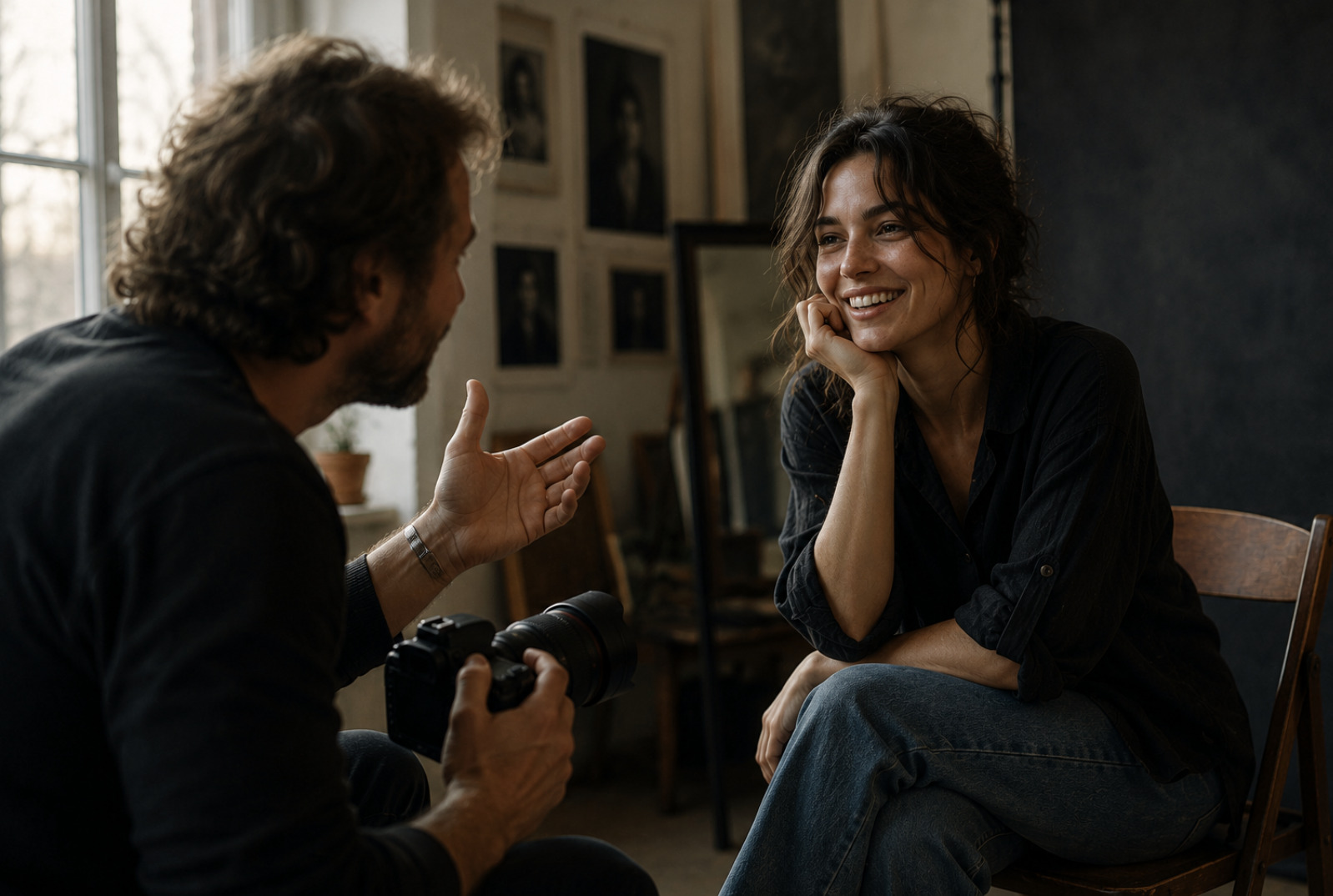
The single most important element of a great portrait happens before a single frame is taken, and it is not technical at all. It is the relationship between the photographer and the subject. People do not relax in front of a stranger with a camera; they stiffen, they perform, they give you the blank, braced expression everyone wears in a photo they did not want taken. What breaks that tension is a sense of ease, of trust, however briefly established — a short conversation, a bit of warmth, a signal that you see them as a person rather than a target.
This is why the same person can look wooden in one portrait and alive in another. The photographer who takes a moment to connect gets a subject who has forgotten, for an instant, that they are being photographed, and it is in those unguarded instants that the real person surfaces. Technical mastery cannot manufacture that; it can only capture it once it appears. The first job of a portrait photographer, in other words, is not to operate a camera but to put a human being at ease.
The eyes carry the portrait
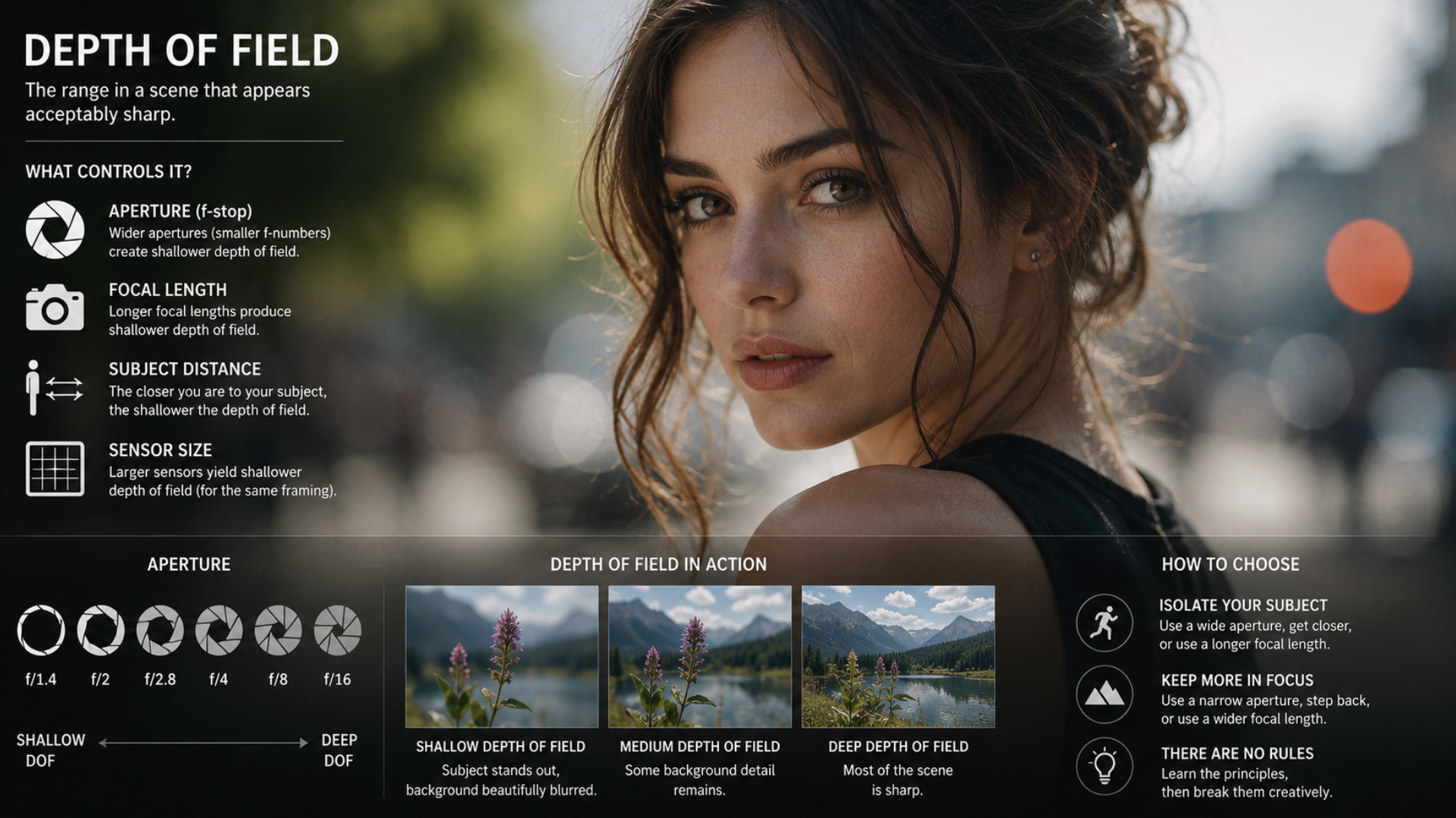
If a portrait has a heart, it is the eyes. We are wired to look at eyes, to read emotion and intention in them, and a viewer's gaze goes there first and lingers there longest. This has one non-negotiable technical consequence: in almost every portrait, the eyes must be sharp. Everything else can fall soft — the background, the shoulders, even part of the face — but if the eyes are not in focus, the portrait fails, because the point of connection is blurred.
Beyond sharpness, the eyes are where a photograph gains life or loses it. A small reflection of light in them, often called a catchlight, is what makes eyes look alive rather than flat and dark, which is why photographers pay such close attention to how light falls on a subject's face. A portrait with dead, lightless eyes feels lifeless no matter how well composed. Learning to see and place that spark of light in the eyes is one of the quiet skills that separates a competent portrait from a compelling one.
Light that flatters and reveals
Light does more for a portrait than illuminate it; it shapes the face and sets the mood. Harsh, direct light from overhead is unkind to human features, carving hard shadows under the eyes and nose and flattening the character out of a face. Soft, directional light — the kind that comes from a window, from open shade, or from the low sun of the golden hour — wraps gently around the features, smoothing without erasing and giving the face dimension. This is why so many photographers chase that particular quality of light, a pursuit we get into in chasing golden hour and the light that flatters everything.
But light is not only about flattery; it is about intention. Soft, even light suits a warm, open portrait; harder, more dramatic light with deeper shadows can lend gravity, mystery or edge. The direction of the light sculpts the face, and the quality of it sets the emotional register. Learning to read light — to see not just how bright a scene is but how it will fall on a person — is one of the foundational skills of the craft, and it is exactly the kind of seeing explored in why the best photographers see light differently.
Distance, background and the frame
Two technical choices quietly shape whether a portrait feels natural. The first is how close you are and with what focal length. Getting physically close with a wide lens distorts the face, exaggerating whatever is nearest the camera in a way that rarely flatters. Standing back a little and using a longer focal length compresses the features into more natural, pleasing proportions, which is why longer lenses have long been favoured for portraiture. The distance you shoot from is not a trivial detail; it changes the very shape of the face the viewer sees.
The second choice is the background. A portrait is about the person, and anything behind them that competes for attention weakens it. A clean, simple, uncluttered background — or one thrown gently out of focus — keeps the eye on the subject where it belongs. Alternatively, a deliberately chosen environment can say something about who the person is, turning the background into context rather than distraction. Either way, the background should be a decision, never an accident. A busy, cluttered frame pulls the viewer away from the face you worked so hard to reach.
Expression over perfection
The final and most human truth about portraiture is that a genuine expression beats technical perfection every time. A slightly imperfect photograph of a person caught in a real moment — a true smile, a thoughtful stillness, a flash of who they are — is worth more than a flawlessly lit, perfectly sharp image of someone wearing a mask. Viewers respond to authenticity; they feel the difference between a real expression and a posed one, even when they cannot say why.
This is the through-line of everything that makes a portrait work. The connection you build, the life in the eyes, the light you choose, the distance and the frame — all of it exists to serve one goal, which is to capture the person rather than merely the face. When editing, this same principle holds: enhance the mood and the light, but never polish the humanity out of the image, the discipline of restraint that matters whether you are working in colour or, as we discuss in black and white photography and when to let go of colour, stripping it away. A great portrait is not a record of what someone looks like. It is a glimpse of who they are — and that is a far more difficult, and far more rewarding, thing to catch.